



Ethylene oxide bill stalls as veto session comes to a close

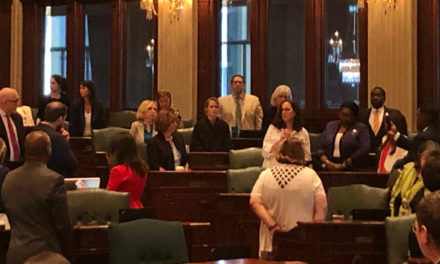
A measure that would have placed stricter standards on ethylene oxide emissions from sterilizing medical equipment ran out of time to make it through the veto session, Rep. Carol Sente, D-Vernon Hills, said Thursday.
Sente’s proposal would have required the capture of 99 percent of emissions and annual third party testing. It was a step down from earlier efforts calling for a complete ban of ethylene oxide in the state. Sente’s proposal would have also exempted hospitals and doctor offices from the regulations.
“While opposing parties were very far apart on this issue, I believed that my legislation was a reasonable first step that made important progress in protecting residents,” Sente said.
Sente said impacted groups were still too far apart, including those pushing for a complete ban.
The issue has gained the attention of state and federal lawmakers in recent months.
In late October, Attorney General Lisa Madigan and DuPage County State’s Attorney Robert Berlin filed suit against Sterigenics, alleging the company’s Willowbrook sterilization plant poses a substantial risk to public health and the environment. The prosecutors also called on the General Assembly to pass legislation banning or greatly restricting the use of ethylene oxide in Illinois.
This week, U.S. Sens. Dick Durbin, D-Ill., and Tammy Duckworth, D-Ill, joined U.S. Reps. Brad Schneider, D-Deerfield; Dan Lipinski, D-Western Springs; and Bill Foster, D-Naperville, in introducing legislation requiring the federal Environmental Protection Agency to revise ethylene oxide emissions standards.
At a town hall Thursday night, Sterigenics officials said it has voluntarily invested millions of dollars in emissions control systems allowing it to capture and control more than 99.9 percent of ethylene oxide used at its Willowbrook facility.
The company also said that ethylene oxide is the only method approved by the Food and Drug Administration to sterilize critical medical devices and that a disruption in production would halt sterilization, negatively impacting public health in Illinois.
Dr. Peter Orris, chief of occupational and environmental medicine for the University of Illinois Hospital, said that it’s disingenuous to say that nothing else can be used to sterilize medical equipment because other options have not been thoroughly explored.
While it’s unclear how prevalent ethylene oxide still is at hospitals across the state, Orris believes that many are moving away from it.
He said officials at UI Hospital told him they don’t use ethylene oxide at the hospital or materials sterilized by ethylene oxide.
“It’s very nice that everybody’s looking at this finally,” Orris said. “We ought to be exploring all of those things and seeing if we can move to a safer substitution.”
Sente said she would continue to work on the issue.
“I will personally continue to work with all stakeholders to find a solution that can become state law,” she said. “Unfortunately, this delay in forward movement does affect resident health and safety.”